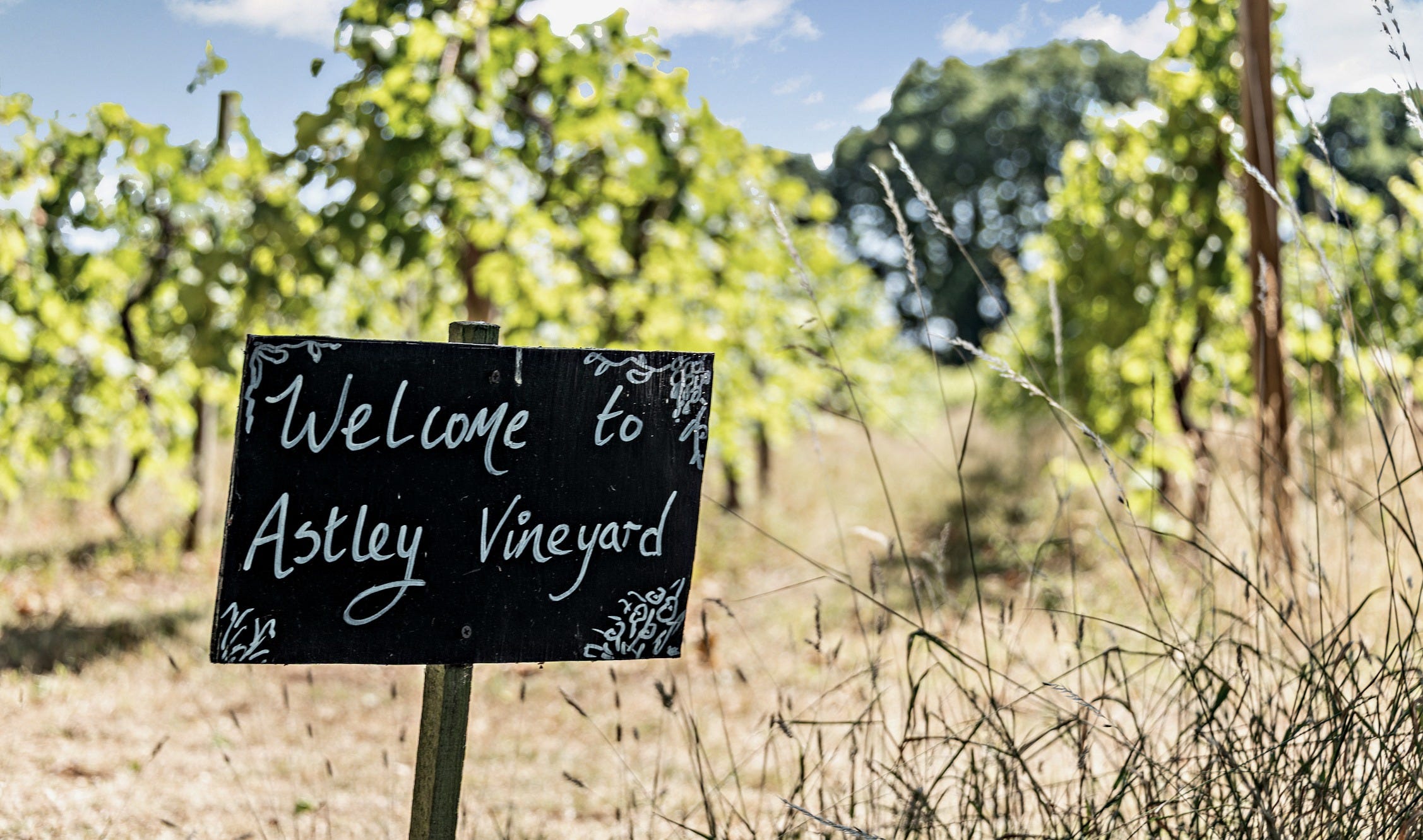
Wine = Grapes + Weather
And I can't do anything about the weather...

Whether the weather be fine,
Or whether the weather be not,
Whether the weather be cold,
Or whether the weather be hot,
We’ll weather the weather
Whatever the weather,
Whether we like it or not!
When I began my second life as a vineyard owner, I vowed not to become the stereotypical farmer. You know the sort: Always moaning about the weather, never satisfied, never optimistic. Nine years into this vineyard life, I’ve got a lot more sympathy for the vagaries of farming than when I was sitting in the comfort of my air-conditioned office.
I have come to understand the pivotal role that weather plays, not just in the development of our crops, but also in the character of our farmers. Let me try to explain, using our vineyard as an example.
First, a little basic background:
Wine = grapes + rain + sunshine.
So weather is critically important.
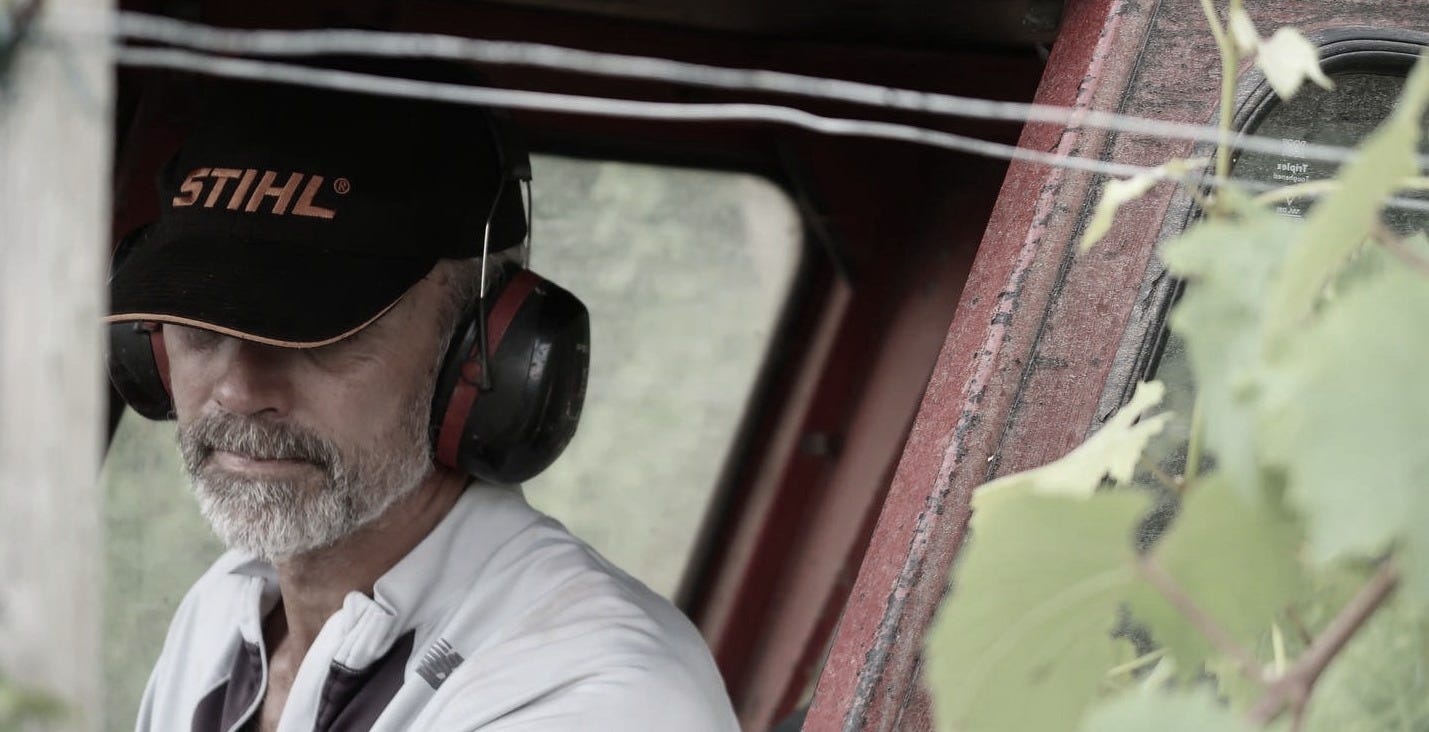
When Astley Vineyard was planted in 1971, it was allegedly the most Northerly vineyard in the world. That is no longer the case, but we are still deemed to be a “marginal” territory for viticulture. The UK’s maritime weather is, to say the least, unpredictable, and getting more so, thanks to climate change.
And this leads to considerable variability in our growing seasons. Which in turn leads to significant changes in yields - both quantity and quality.
Our average yield at Astley is 7 tonnes. In 2018, with perfect year’s weather, it was 14 tonnes. In 2020, with a disastrous late frost, it was 3.5 tonnes.
Our “typical” year’s wines are light, fresh and crisp. Our “exceptional” year’s are rich, full-bodied and fruity. Our “normal” harvest is spread over two months from mid September to end October. Our “challenging” harvests can be over in three weeks, can begin in August, or end in mid November.
Imagine trying to run a manufacturing business with those sorts of production challenges!
And there’s not really much that we can do about it. The vineyard manager (me) must respond to the conditions that are sent from on-high. And the winemaker (my son) must react to the grapes as and when they appear.
It can be very gratifying when all goes well, the sun is shining, the birds are singing and the grapes are behaving themselves. It is enjoyable to be pruning the vines in the dead of winter, knowing that the cold conditions are just what are needed to give the plants a dormant season to recuperate. It’s ok to be sitting inside watching the rain lashing down, knowing that the grapes will be plump and juicy.
But it doesn’t always work like this.
A mild winter can mean the vines are more susceptible to over-wintering pests and diseases. It is no coincidence that one of our best years, 2018, followed the brutally cold Beast from the East which killed all the pests and diseases.
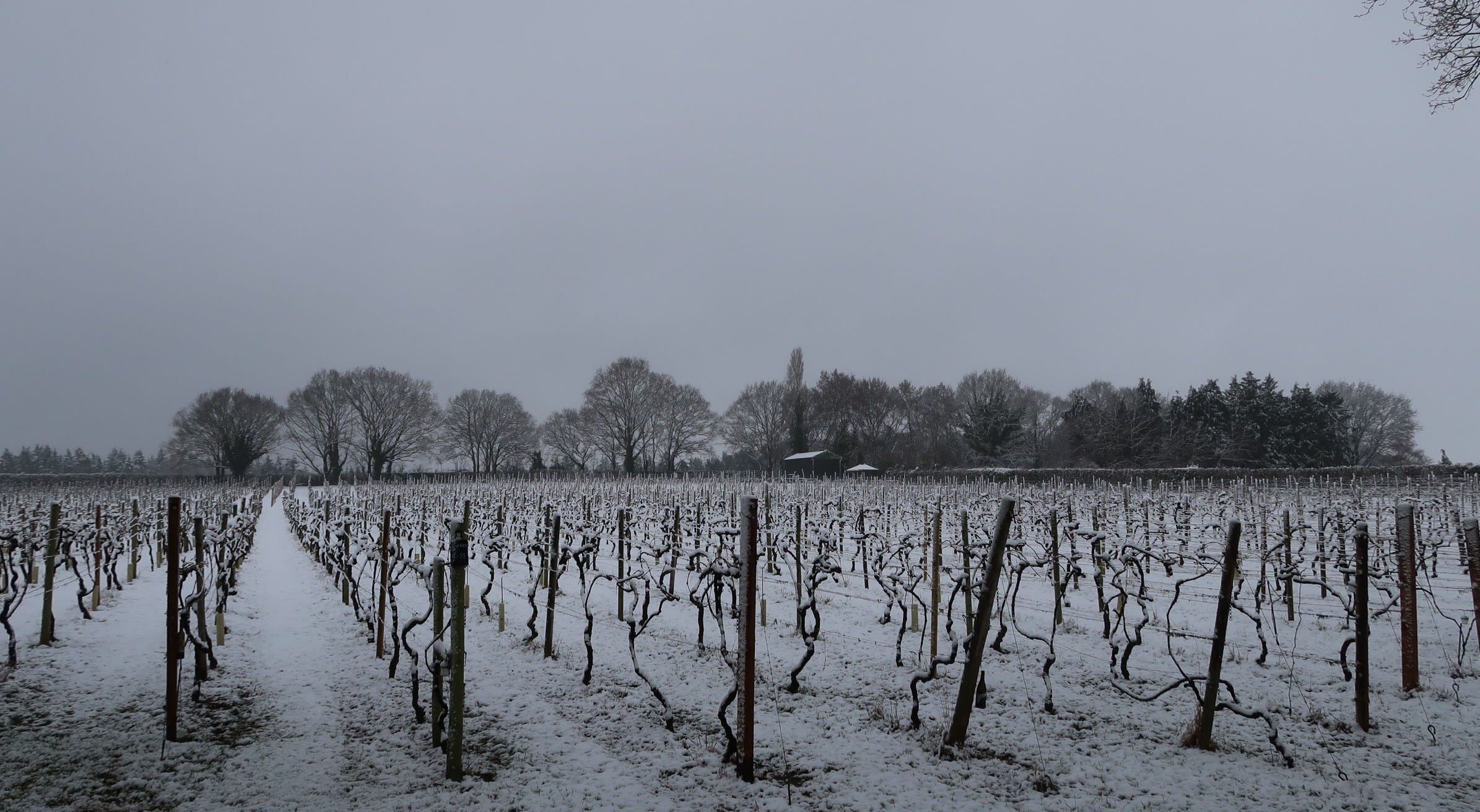
A wet summer significantly increases the risk of mildew and botrytis. A dull summer makes more tricky the task of keeping the grapes on the vine long enough to get ripe. A late Spring frost, such as the one in May 2020, can kill all the buds before they even get going. An early Autumn frost could wipe out all of the grapes after a year’s hard work.
In France they have summer hailstorms. In Australia and America - wildfires. In the Med - droughts. In Central Europe - floods.
So, in the world of wine, the idea of “vintage variation” is not something invented by wine snobs to make ordinary mortals feel inadequate. It is a viticultural, meteorological truth: each year is different. Every year presents new challenges to the grape grower and the winemaker. So, of course, 2018’s wine is very different from 2021’s.
As a vineyard manager at a small family business, I cannot and do not claim to be a “proper farmer”. But I nevertheless carry the scars of every year’s weather, and can recall in gruesome detail the particular challenges that we’ve faced.
This year, we have been keeping our fingers crossed that the lovely early Spring sunshine would not be followed by a severe early frost. We’ve been lucky so far. But not so our friends with vineyards further South. I was particularly struck by the messages coming out of Stanlake Vineyard who had 50% of their potential crop obliterated overnight.
You might have thought this would lead to an outpouring of self-pity and woe. But far from it. Their message was one of resilience, determination and hopefulness. They were glad they had sufficient stocks of wine to see them through the lean 2026 harvest that was now inevitable. They were glad they had some diversified income from tourism. But above all, they recognised that this was just part of the inevitable cycle of farming. Good years and bad years.
And this really resonated with me, as I’m sure it does with most farmers. We are in a world where our best weapon is a phlegmatic acceptance of the natural cycle. Where one has to realise that you can only do your best: you can never beat nature. This is not the same as being passive or defeatist: every farmer I know is hugely hard working and very determined. But they also have a longer-term perspective than most people, because they’ve seen it all before, and they know that there will be other years, other harvests.
Which made me think: surely there is much in this natural wisdom that would be beneficial to people who aren’t farmers?
Working with, and in, nature, as I do, is wonderful but humbling. There are short-term triumphs and disasters. There is an inexhaustible supply of work to be done. Nature can be bountiful or severe. But it’s never personal. And it’s never permanent.
Maybe the biggest lesson I’ve leant since moving from corporate life to farming is that I, and my efforts, are relatively insignificant compared with the impact of the weather. This realisation leads me not to take myself, or my setbacks, or victories too seriously. And perhaps that’s something the corporate world could do with a bit more of?