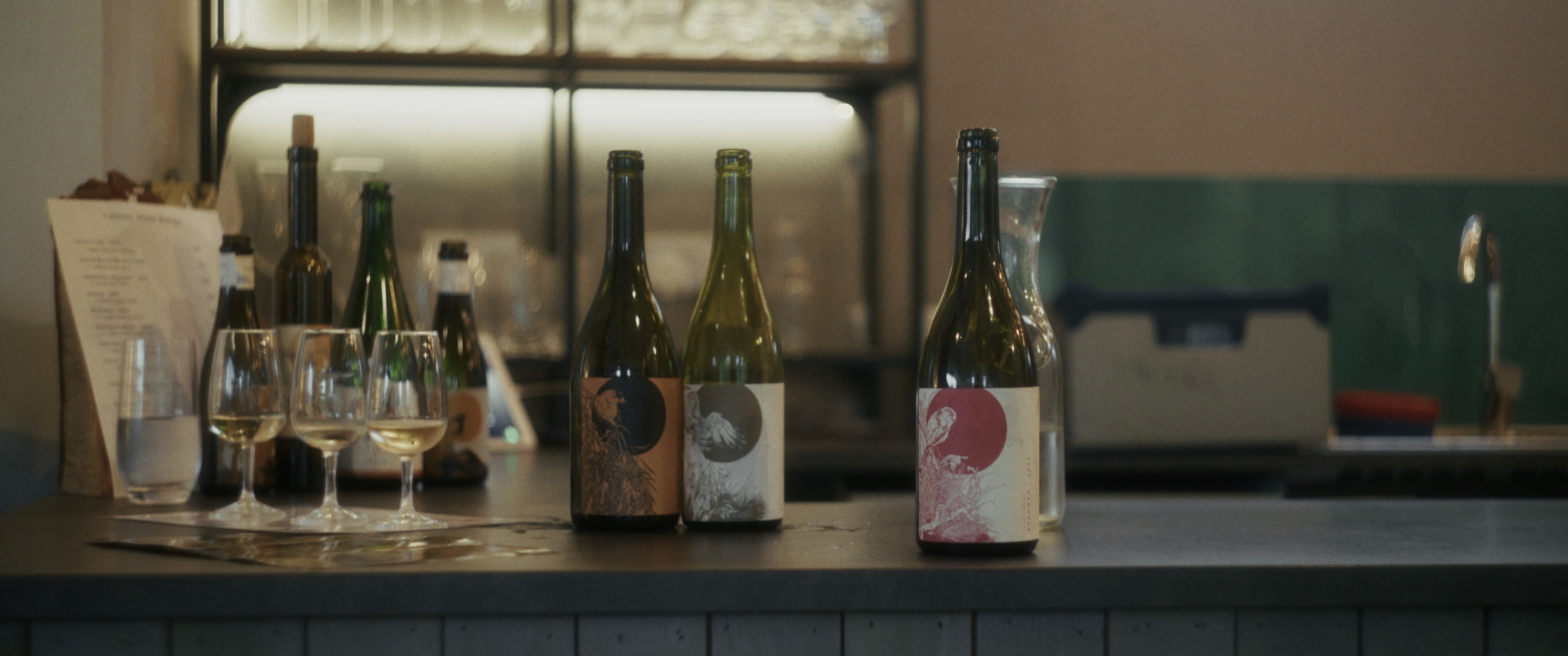
A table is an invitation
Hospitality is not about what you put on the table. It is about what happens when people sit down together.

I have been observing guests at our Tasting Room tables for several years, watching what happens when strangers sit down together.
It still surprises me.
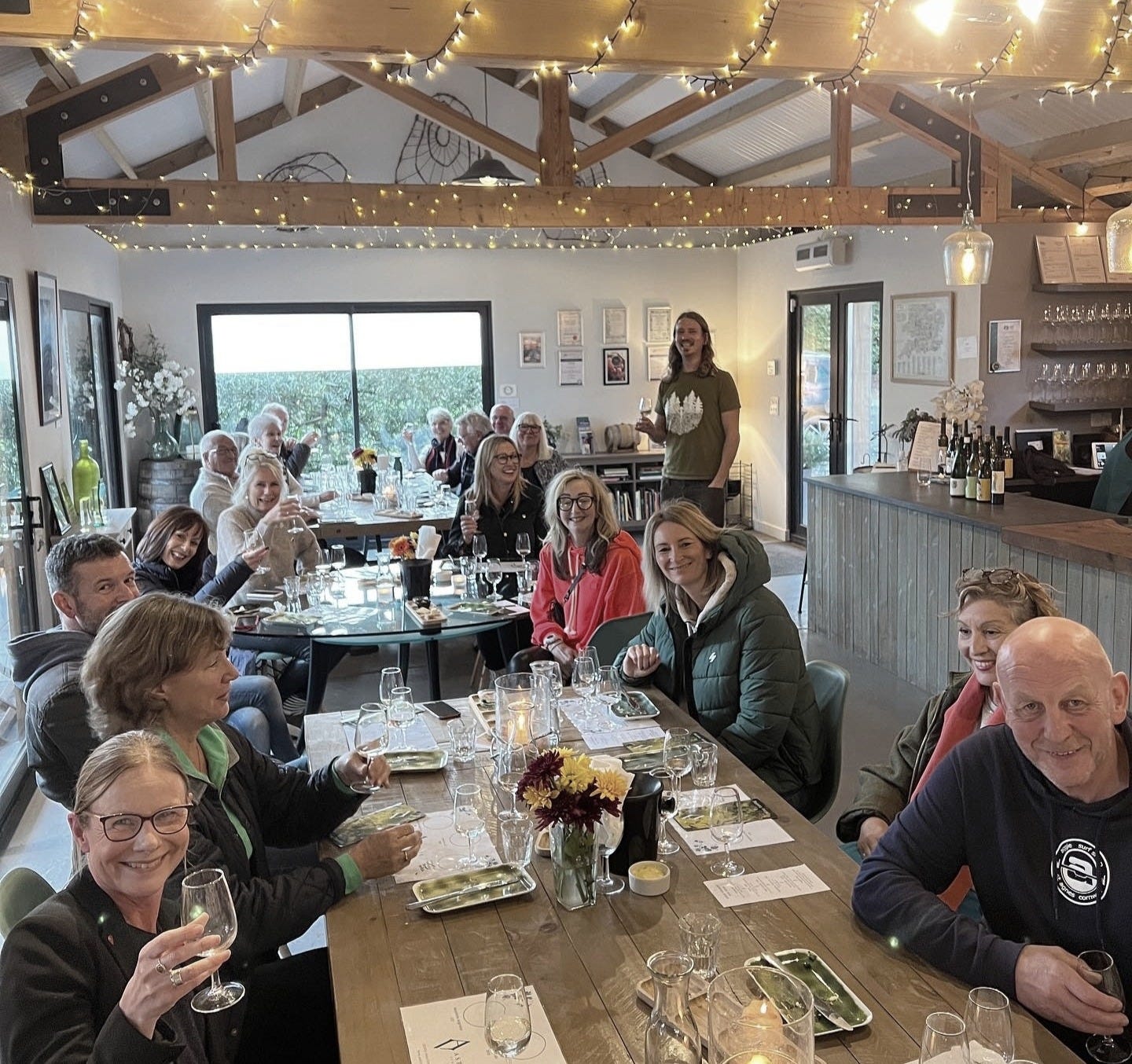
There is a moment when the room changes. The strangers who arrived in separate cars and sat with careful inches between them lean in towards each other. The man who came alone and looked as though he regretted it is talking to someone across the table about the wine in front of him. The table is full of glasses and empty plates. At some point, the caution dropped and nobody noticed it leave.
I’ve spent a lot of time thinking about why.
We assume hospitality is about the details — the quality of the wine, the colour of the plate, the temperature in the room. And it is, partly. You can ruin an evening very quickly with cold food or a draughty room. But those things are the foundation only. They stop things going wrong. They don’t make anything go right.
The thing that makes a room come alive is the table itself.
A long table is not a comfortable piece of furniture. You can’t hide at it. You sit shoulder to shoulder with someone you’ve never met, close enough to hear them breathe, and there is no screen to look at and no obvious reason to speak. That slight vulnerability — that moment of “who on earth am I going to talk to?” — is actually what creates the connection. Without it you just have a nice room.
We live in an age of designed and deliberate privacy. We travel in our own sealed cars, eat in front of our own screens, sit in coffee shops with headphones that announce clearly ‘Leave me alone.’ The default of modern life is separation. Which is why when you remove it, suddenly and completely, people feel something they weren’t expecting to feel.
Not everyone sits down easily. Some guests sit down with the awkward stillness of someone who has just arrived at a party and can’t yet see a friendly face, There is the couple at the end checking whether they really must sit quite so close or using their phones as shields. And the single traveller hoping someone interesting ends up next to them. I notice all of it.
But they all come round.
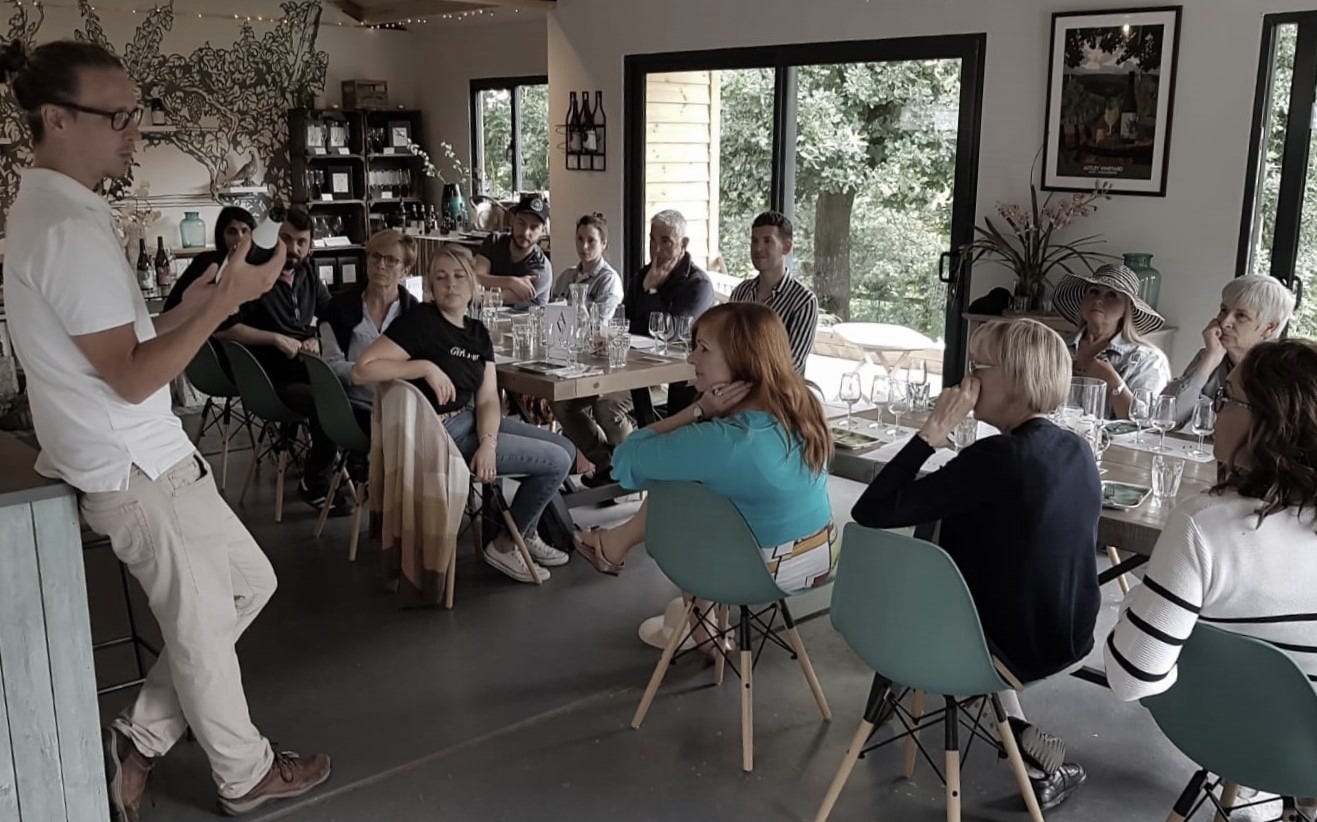
The tables at Astley are bare wood with no cloth. We light candles on the days when it feels slightly gloomy. The glasses are lined up in rows, each one already half-full, catching the light. There is homemade bread. There is local cheese. Our winemaker Chris leans casually against the bar and starts talking about what’s in the glasses — not as a lecture but as a conversation, one he’s happy to be interrupted. And somewhere in all of that, the room stops being a group of individuals who happened to park in the same car park and becomes something else.
Communal eating is as old as we are. The great halls and monasteries of medieval England were built around long refectory tables — not because those benches were comfortable but because feasting together was how you established trust. You sat next to your neighbour, and you shared what you had, and you left knowing each other a little better. We have not changed as much as we think. The same mechanism works just as well now, in a vineyard tasting room in Worcestershire, as it did in the fourteenth century.
What I’ve noticed, over many years and many tables, is that the conversations that start at a wine tasting rarely stay about wine. They go sideways quickly — to where people live, what they do, what brought them here, what they’re celebrating or recovering from. The wine is a door, not the room. People discover things about each other that they didn’t come expecting to discover. Occasionally they swap numbers. Quite often they come back.
The practical point — and there is one — is that this doesn’t happen by accident. It requires a table that makes it possible. A room where the layout says sit together, not separate. A host who takes the first conversation seriously, who asks the first question, who makes it safe to be a little bit vulnerable in a room full of people you don’t know. Hospitality is the creation of conditions. The warmth that visitors feel isn’t magic. Someone built it.
I think about this when I’m visiting other hospitality businesses — people who have put enormous care into their product and their space and are puzzled that visitors don’t linger, or the atmosphere feels cold and quiet. Often the product is excellent. The room is lovely. But there are many small tables for two, each one an island, and the atmosphere of the room is private meals happening simultaneously. Nobody is talking to anyone they didn’t arrive with. Nobody is going home with a story.
A long table changes all of that. It says ‘you are not separate today. Try it the other way.’
I’m not suggesting everyone tears out their furniture. But I do think it’s worth asking the question. What does your space invite people to do? Not what you intend — what it actually invites. The distance between those two things is where the hospitality lives.
The last drop of the evening is always the best and the saddest. Not because of what’s in the glass. Because by then nobody wants to leave